Free Self-Assessment
Were you in a difficult relationship — or were you disappearing in one?
The Self-Abandonment Checklist is a 20-item diagnostic that names what most people can feel but can't articulate — the quiet ways you lost yourself to keep a relationship alive.
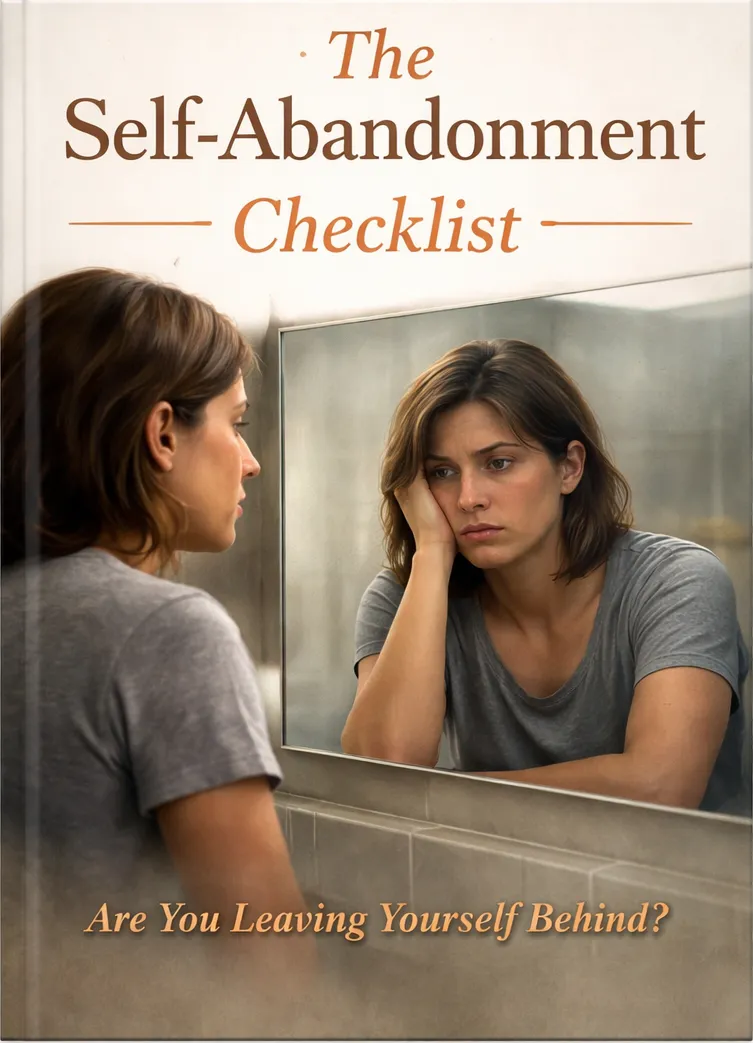
Take the audit.
See what you've been carrying.
It takes five minutes. What it shows you will stay with you much longer.
Does any of this sound familiar?
Five things people don't realise they're doing until someone names them.
"I called it patience when I was really afraid of losing them."
"I felt like I was constantly auditioning to be chosen, rather than simply being wanted."
"I stayed silent when something hurt me, telling myself I was being the bigger person."
"I lost touch with things I cared about — friends, hobbies, opinions — to maintain the relationship."
"I felt exhausted by the relationship but stayed because leaving felt worse than staying."
What the checklist gives you
◎
20 specific statements
Real, first-person descriptions of the quiet ways you lost yourself to keep a relationship alive. You'll recognise yourself in the language.
◫
Three sections, one clear picture
How you communicated (or didn't), how you responded to their behaviour, and how you felt inside the relationship — mapped across all three.
◈
A scoring guide that means something
Not a personality quiz. A direct assessment with an honest interpretation of what your score reveals about the pattern underneath.
♡
The Best Friend Test
The single most honest question you can ask yourself after a relationship. It reframes everything — and it's the moment people remember.
"Most people don't recognise it as self-abandonment. They call it love. They call it compromise."
From the Checklist
Take the audit.
See what you've been carrying.
It takes five minutes. What it shows you will stay with you much longer.

Igor Pershin
The Integration Lab · Relationship Coach
NLP Practitioner, Timeline Therapy specialist, and someone who built this programme from lived experience — not just theory. The Integration Lab exists because healing after heartbreak shouldn't mean years on the couch talking about your feelings. It should mean resolving them at root cause and building a life you don't want to abandon again.
The Integration Lab